Let’s face it, the way people search for things online has changed significantly over the past few years and most businesses seem to be playing a bit of catch up. Now reflect on your habits for a moment, think about the last time you typed a question into Google and actually went through ten blue links. It probably hasn’t been a while.
You’ve been asking ChatGPT, Perplexity, or Gemini instead. You get a clear answer, a couple of recommendations, and you go on your way.
No scrolling through pages, no switching tabs, no clicking ads. Now switch that thinking around and start realizing what this means for your business. If your brand isn’t appearing in those AI search results, then you’re paying less visibility to a large and growing segment of your audience. And that is the problem that is built to be addressed year after year.
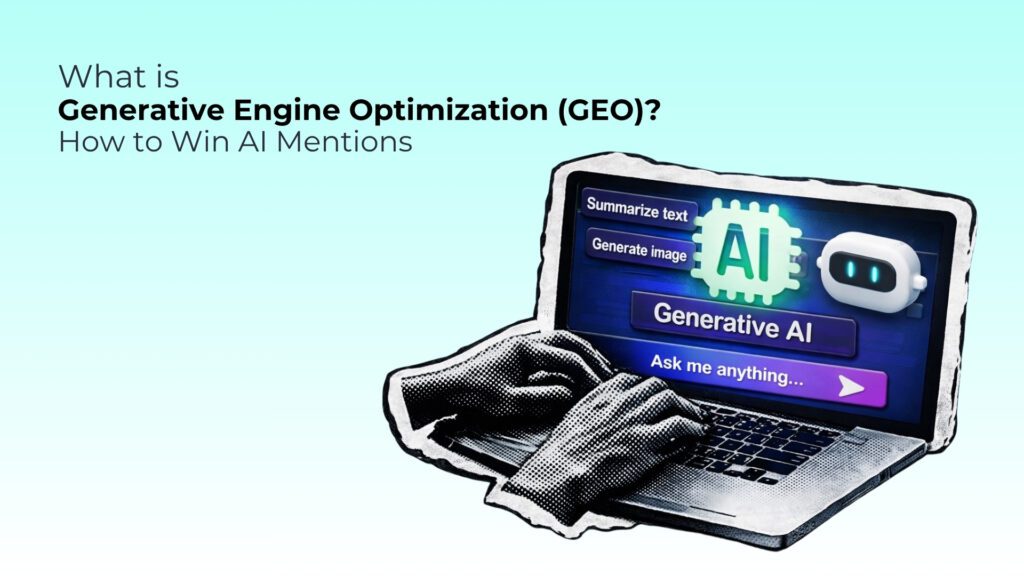
What Exactly Is GEO?
GEO is what you get when traditional SEO collides with AI-aided search. Regular SEO is all about trying to rank on Google. You are cajoling for keywords, acquiring backlinks, enhancing meta- tags every this to be on the first page.
And this is still significant, don’t misunderstand. GEO though is a whole other animal. It’s not about rankings on a results page; it’s about trying to get your name called-out within the responses of an AI.
When Mike asks ChatGPT “which B2B agencies actually deliver results in India?” you’d like your own name to be in the body of the reply, not hidden away in some link. It’s not so much about clicks as much as it is about credibility. Not so much about a bunch of eyes that visit so much as they trust. If an AI teases your name, then that has some roll. They trust a referral than an ad.
Why This Matters Right Now
This is what I lose sleep over:You could have one of the most brilliant B2B marketing ops in the land, and be totally invisible in AI discussions. Your SEO is probably on point.
Your Google rankings are solid. But without AI models directing AI users to your brand for your niche expertise, it’s not going to matter.
And that one is growing rapidly. The change isn’t on the way. The change is already here. Those organizations that adapt and exploit first, will have the world’s biggest advantage, and the rest will be wondering where their leads disappeared over the next couple of years.
GEO vs. SEO: They’re Not the Same Thing
People keep asking me if GEO replaces SEO, and the answer is no. They work differently and they solve different problems. Here’s the simplest way I can break it down:
With SEO, you’re optimizing your website so it ranks higher on search engines. People type in keywords, your page shows up, they click through. The whole model revolves around clicks and traffic.
With GEO, your brand gets woven into an AI’s response. There’s no click involved — the AI just mentions you as part of its answer. It pulls from context, authority, and how well-known your brand is across the web. The focus shifts from keywords to credibility, from ranking to recognition.
SEO gets you leads. GEO gets you trust. The smartest play is doing both, but if you’re ignoring GEO entirely, you’re leaving a growing channel completely untouched.
How AI Decides Who Gets Mentioned
The majority of people make incorrect assumptions about this section. People believe that AI recommendations work at random while they think that hidden system hacks exist to manipulate the system. The existence of secret hacks to manipulate the system does not exist. The AI models function as machines that recognize patterns to detect specific signals.
The depth of expertise which a person possesses exceeds the number of skills they have. AI will not consider you an expert until you publish 100 blog posts which all remain at basic level content. Your research needs to provide in-depth analysis about account-based marketing through one solidly argued piece which will benefit you more than twenty general “top 10 tips” articles. AI can distinguish between two people who have different levels of understanding about a subject.
Your brand needs to exist beyond your own website. AI has limited information about your company when it appears only on your own website. The pattern AI detects through your media presence includes your mentions in industry publications and your appearances in podcast transcripts and your inclusion in other articles. Third-party mentions function like votes which establish trustworthiness.
The combination of structure with clear content helps to improve communication. The AI system handles organized content better than it processes cohesive text blocks which create reading difficulties. Clear headings, logical flow, and concise paragraphs create two advantages for readers and machine systems which need to extract information from your content.
Authority develops through consistent behavior over an extended time period. The AI system cannot determine your area of expertise when you write about B2B growth strategies and recipe blogs and cryptocurrency content in different weeks. Choose your expertise area and maintain focus on that particular field. The models recognize brands which create relevant content about specific subjects through their ongoing production practices.
What Actually Works: Practical Steps
Enough theory. Here’s How To Handle It. Write like a real person with real opinions. Sure, that may go without saying, but just take a gander at most of the B2B writing out there. It’s all written by committee.
Safe, uninteresting, and totally forgettable. Models are trained on large quantities of writing and recognize the difference between content with an authentic voice versus content created for the sake of having content. Write what you really think. Have an opinion. If you disagree with the status quo in your industry, express it and make sure to elaborate.
That is the kind of writing that will be referenced. Build a content ecosystem, not a blog. If you launch a blog by itself it’s just one data point in an ecosystem. You need case studies substantiating results, LinkedIn posts sparking conversations, guest articles in respected trade publications, appearances on industry podcasts. What each of these does is give an AI more evidence to work with when the model decides who to recommend.
It’s like building an ecosystem of proof for an AI. Be precise about what your niche is. Generalist content doesn’t perform well in GEO. If you’re a demand gen agency, don’t talk about (or write about) “digital marketing” in a general sense your audience asks and make sure your content answers them plainly.
Mistakes That Will Cost You
Same mistakes I keep making over again and in the same companies I think ought to know better. The number one is publishing information that sounds like it was penned by AI.
How poetic is it that you’d sit down and write all your blogs with ChatGPT and then suddenly ask yourself why ChatGPT isn’t recommending you. AI can sound very general and as we all know general will not get you an authoritative brand.
If anyone can write it, then no one can. What if you’re making no mistakes using everything you’re doing just optimizing your content in an attempt to win at SEO? In the meantime, they could be dominating in AI.
Don’t let your SEO stats be the only measurement of success. Winning in one doesn’t necessarily mean winning in the other. Not tracking brand mentions is a silent killer. Plenty of companies obsess over backlinks but have no idea how many articles, forums and blogs have your name in them without links pointing toward it.
Unlinked mentions- your brand name alone in articles, forums, and social media- matter for GEO like they never did for SEO. When you try to be everything to everyone, you become nothing. Zero in on one thing and excel.
Where This Is All Heading
Search has changed from showing websites to users who need to search for things. This shift has reached its midpoint and now moves toward its complete progression.
The companies that adapt early will maintain their visibility while gaining a gradual advantage which multiplies with time. The process of building authority begins with each mention. The system generates trust through AI recommendations. The system creates trust, which leads to more mentions. Organizations must begin their flywheel operations, since this move creates enduring advantages, which their rivals cannot attain.
GEO functions as an additional system that works with SEO. Users need to see SEO as the primary method which maintains their website’s visibility on search engines, while GEO acts as the secondary method which makes their brand visible in non-search engine discussions.
The existing change occurs through silent means, but it contributes to actual progress. Your competitors may already be working on this. The question isn’t whether GEO matters — it’s whether you’re going to act on it before the window of early advantage closes.